Las Conquistas
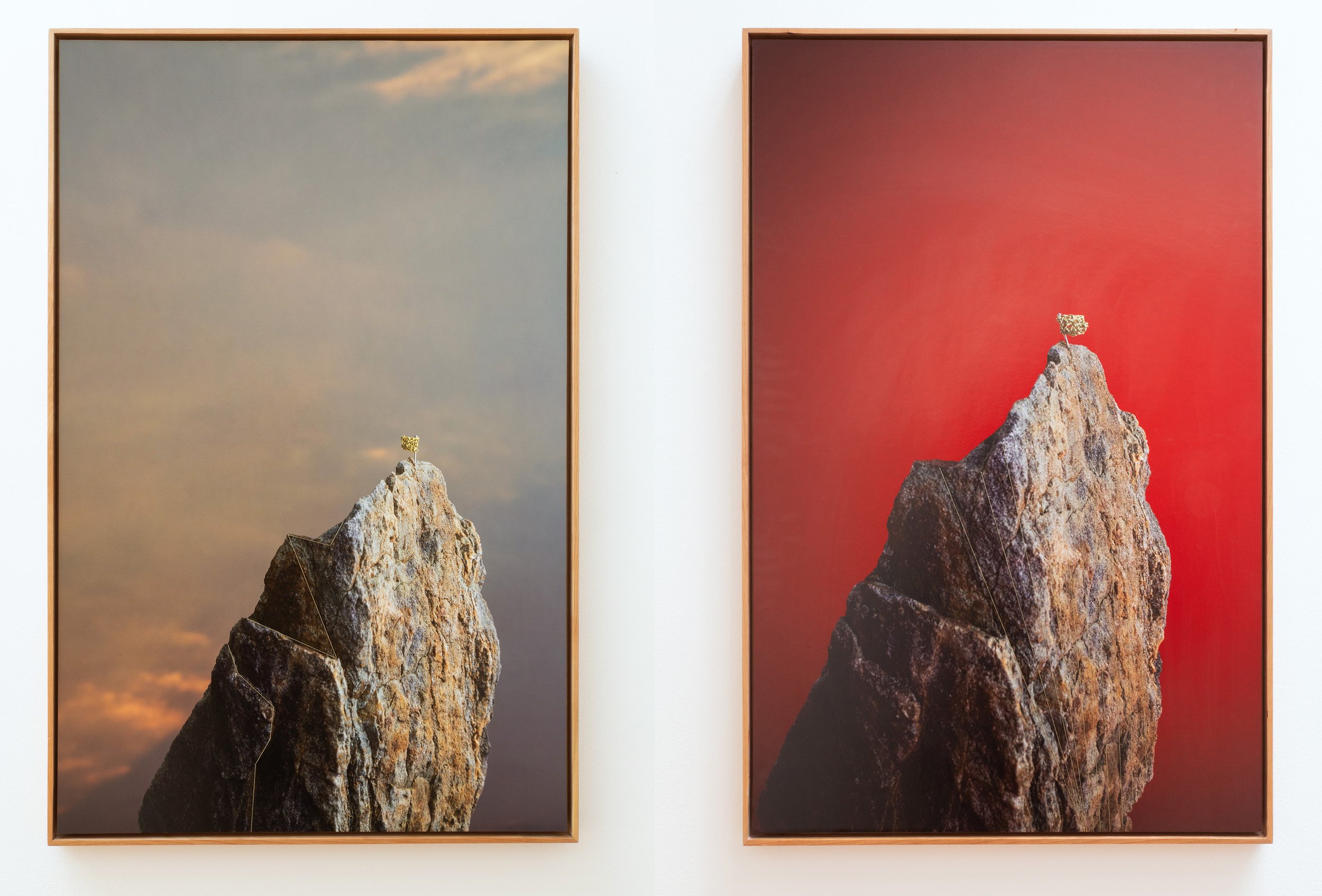
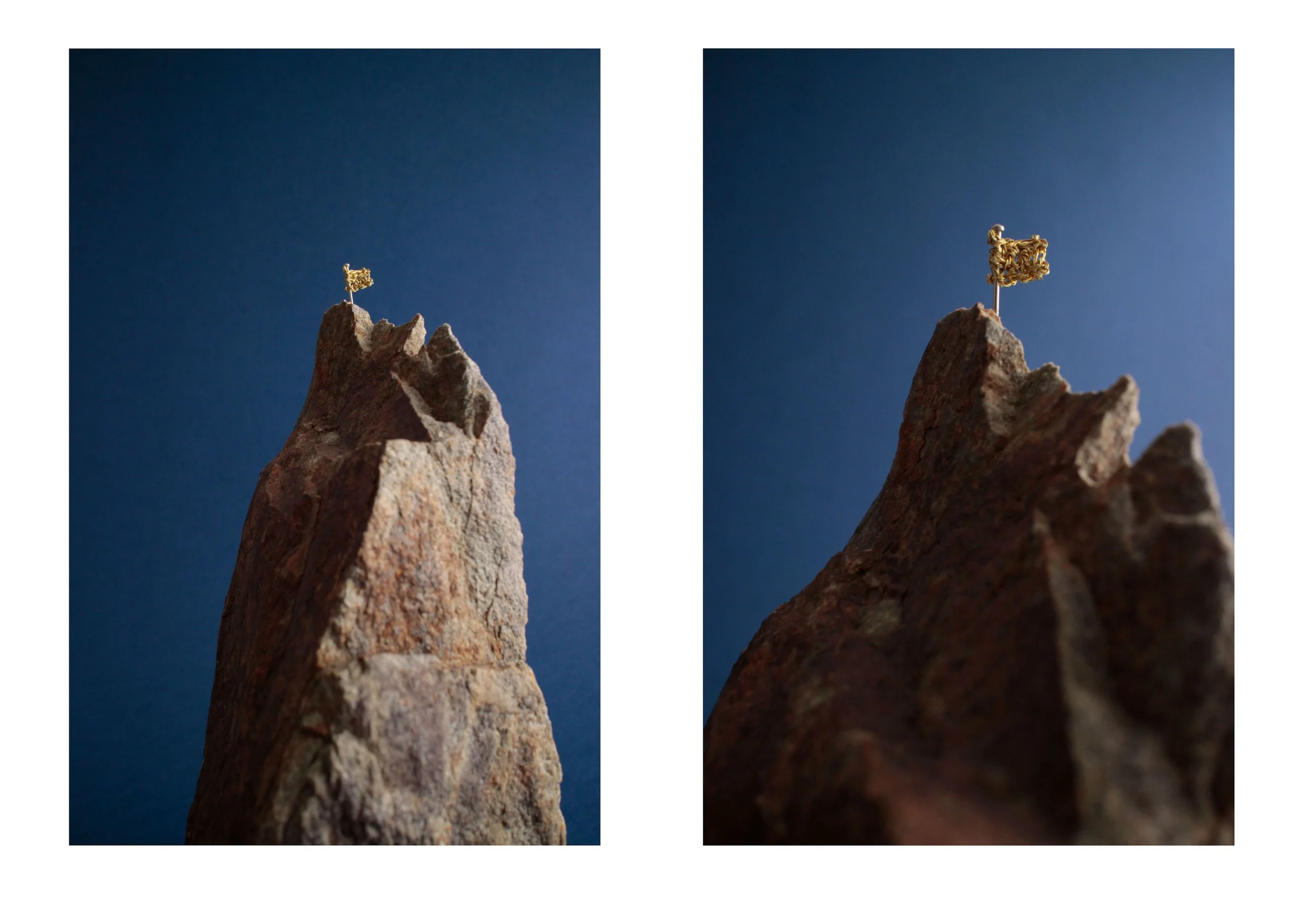
Pieces from this ongoing series have shown at: A Different Landscape (London & Art Cologne 2024 - ammann//gallery Z (Mexico City) - Ángulo Cero “A child or an old person has a true account in the revealing forms of a single rock. Since man’s own measuring equipment is so manifestly inadequate for the scale of entire mountain ranges, why shouldn’t the understanding of geological processes be expressed as well in a rock as in a whole mountain?” - Simon Schama, Memory and Landscape, on John Ruskin The Conquests explores questions about the construction of landscape and its meaning. Human intervention in space contributes to the construction of a “place,” introducing elements that constitute the landscape, such as scale, distance, coordinates, and perspective for observation. If a landscape is the sum of multiple elements, does a single element represent and signify the entire landscape? The interplay of perspective and scale in the diptych is further enhanced by the embroidery on the photographic surface, highlighting the tensions between the image and “reality.” On one hand, like a treasure map, the thread points the way to the summit of a landscape diorama, a simulacrum of the real thing. On the other hand, the diorama becomes a conquest of the eternal through the idyllic image of vertical lines ascending the rock, emphasizing the impossible direction of the sedimentary lines that formed the non-mountain. The construction of the landscape imaginary, and particularly of mountaineering, evokes images and emotions of adventure and the illusion of physical and inner conquest. The absurd yet profoundly significant notion of being able to “conquer” a mountain by raising a flag, the futile act of showing eternity “I was here—I existed,” is interwoven with the contemporary approach to landscape as a consumer product. Photography and its dissemination on social media have now become that figurative banner of demonstrating to the world, to the mountain, and to eternity, that we exist.
Inquiries for Conquest I diptych (EUR & USA): ammann//gallery contact
“Un niño o un anciano dispone de un informe verdadero en las formas reveladoras de una sola roca. Dado que el propio equipo de medición del hombre es tan manifiestamente inadecuado para la escala de cordilleras completas, ¿por qué la comprensión de los procesos geológicos no debería expresarse tan bien en una roca como en una montaña entera?” - Simon Schama, Memoria y Paisaje, sobre John Ruskin
Las Conquistas explora cuestionamientos sobre la construcción del paisaje y su significado. La intervención humana sobre el espacio contribuye a la construcción de un “lugar”; introduciendo elementos que constituyen el paisaje como escala, distancia, coordinadas y perspectiva para la observación. ¿Si un paisaje es el conjunto de múltiples elementos, un solo elemento representa y significa el paisaje entero?
El juego de perspectiva y escala en el díptico toman como elemento adicional el bordado sobre la superficie fotográfica, remarcando las tensiones entre la imagen y lo “real”. Por un lado, a modo de mapa del tesoro, el hilo señala un camino a la cima de un diorama paisajista, un simulacro de la real. Por el otro, el diorama se vuelve una conquista de lo eterno a través de la imagen idílica de las líneas verticales ascendiendo la roca, remarcando la dirección imposible de las líneas sedimentarias de la formación de la no-montaña.
La construcción del imaginario del paisaje, y particularmente del montañismo, evoca imágenes y emociones de aventura y la ilusión de la conquista física e interior. Lo absurdo pero sin embargo profundamente significativo de poder “conquistar” una montaña por el acto de alzar una bandera, el acto fútil de enseñarle a la eternidad “aquí estuve - yo existí”, se entreteje con el acercamiento contemporáneo del paisaje como un producto de consumo. La fotografía y su propagación en medios sociales ahora se ha vuelto esa bandera figurativa de demostrarle al mundo, a la montaña y a lo eterno, que existimos.